

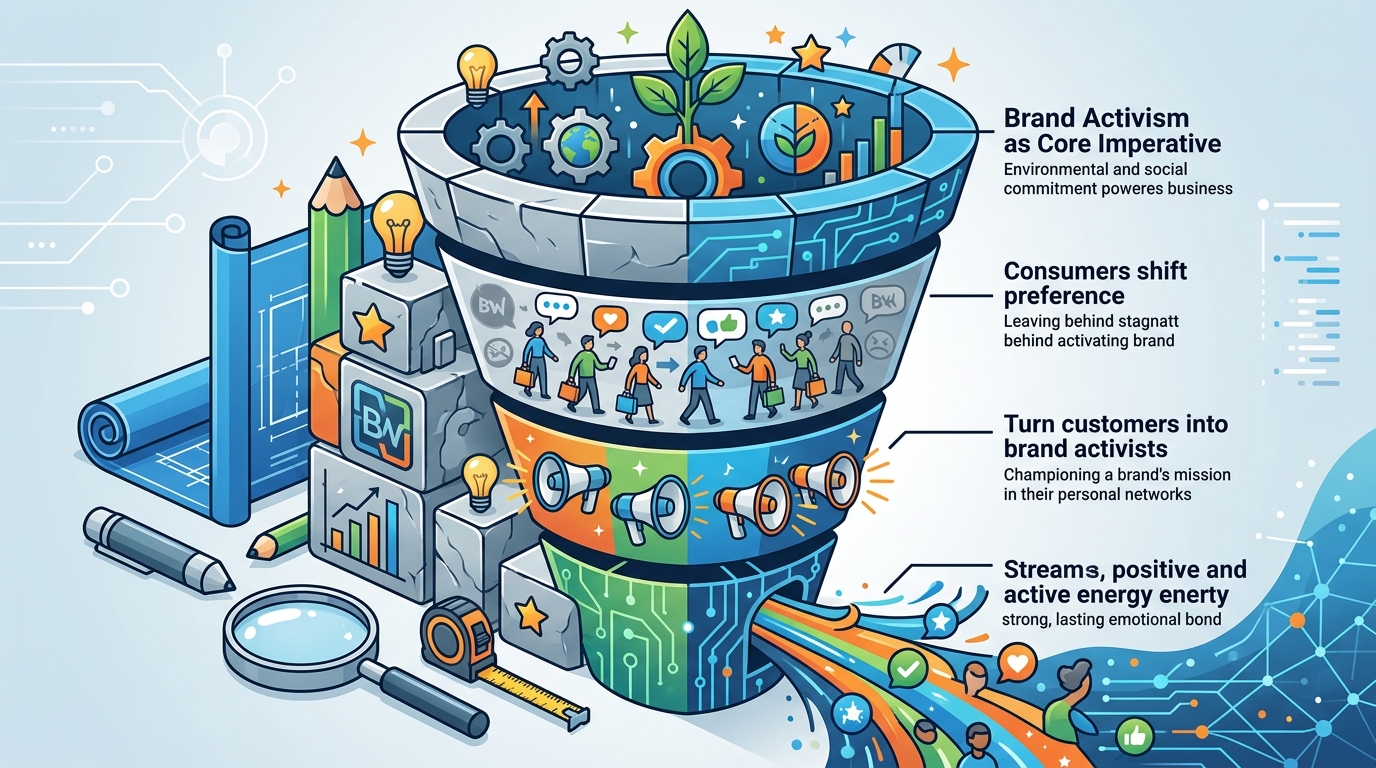
Brand activism has shifted from a niche marketing tactic to a core business imperative. According to recent industry analysis, consumers now expect companies to take definitive stances on social and environmental issues, with over 60% of global shoppers willing to switch brands based on a company's public position. This data shows that passive branding is no longer sufficient for maintaining market share in a polarized digital landscape. Companies must move beyond traditional loyalty programs to create brand activists, individuals who not only purchase products but actively champion the company's mission in their personal networks. This guide provides a rigorous framework for evaluating, implementing, and measuring brand activism strategies to ensure they drive tangible business growth rather than reputational risk. (BarberWarren mdash About)
Defining Brand Activism and Its Evolution
To evaluate brand activism effectively, one must first understand its structural definition. Brand activism is the practice of a company taking a public stand on social, political, or environmental issues to align with its core values and engage consumers on a deeper emotional level. This differs significantly from traditional corporate social responsibility (CSR), which often focuses on philanthropy or compliance. Activism requires a clear, often controversial, position that invites dialogue and community formation.
The evolution of this concept has been driven by demographic shifts. Millennials and Gen Z consumers, who now represent the largest share of the workforce and consumer spending, prioritize authenticity and purpose. Brand enthusiast is a term often used to describe loyal customers who repeatedly purchase products, but brand activist goes further by describing those who defend and promote the brand voluntarily. The transition from enthusiast to activist is the primary goal of modern strategic marketing.
Evaluating whether a brand is ready for activism requires an audit of internal culture and external perception. If a company's internal practices contradict its public statements, the strategy will fail. Authenticity is the currency of activism. Companies must ensure their operational realities match their marketing narratives. This alignment is critical for long-term sustainability and trust.
The Strategic Framework for Evaluation
Evaluating a brand activism strategy involves a multi-layered analysis of intent, execution, and impact. The following framework provides a structured approach for agencies and business leaders to assess potential campaigns.
1. Alignment with Core Values
The first step in evaluation is determining if the chosen cause aligns with the brand's historical identity and operational capabilities. A mismatch here leads to accusations of woke-washing, a term used to describe superficial or insincere support for social causes. Brands must ask if they have the historical precedent or operational expertise to speak authentically on the issue. For example, a technology company advocating for digital privacy has more credibility than one with a history of data breaches.
2. Audience Resonance and Risk Assessment
Not all activism resonates with every audience segment. Evaluation must include a deep dive into consumer sentiment data. Brand perception is the sum of all interactions a consumer has with a company, including advertising, customer service, and public statements. Activism can polarize audiences, potentially alienating existing customers while attracting new ones. The net positive must be calculated carefully. Risk assessment tools should map potential backlash scenarios and prepare response protocols.
3. Operational Integration
Activism cannot be confined to marketing materials. It must be integrated into supply chain decisions, hiring practices, and product development. If a brand advocates for sustainability but uses non-recyclable packaging, the disconnect will be detected by savvy consumers. Evaluation includes auditing the entire value chain to ensure consistency between message and action.
Case Studies in Activist Branding
Examining real-world examples provides concrete evidence of successful and failed activism strategies. The following cases illustrate the principles of alignment and execution.
| Brand | Activist Initiative | Outcome | Key Lesson |
|---|---|---|---|
| InVeris | Unifying internal culture across legacy brands (Caswell, fats) under a single mission-ready identity. | Created a cohesive internal and external narrative that positioned the company as a leader in human performance. | Internal alignment precedes external activism. |
| Metra | Launching as a unified North American entity to eliminate stress and anxiety in B2B relationships. | Successfully repositioned from a collection of plants to a single, reliable partner. | Activism can address emotional pain points like anxiety. |
| BlackFin Square | Positioning as a growth activist for CIOs, reducing the burden of managing multiple tech partners. | Established deep trust with high-level executives by focusing on their professional success. | B2B activism focuses on enabling client success. |
| Artisianal Brewing | Creating the "Flip Flop Nation" community to celebrate summer culture in Jersey Shore. | Turned customers into brand activists who actively participated in brand events. | Community building drives activist behavior. |
These examples demonstrate that activism is not limited to social justice. It can encompass operational excellence, community building, and emotional support. The common thread is a clear, actionable stance that benefits the consumer or the broader community.
Risks and Mitigation Strategies
Engaging in brand activism carries inherent risks. The primary risk is reputational backlash, which can occur if the brand is perceived as hypocritical or insensitive. Mitigation strategies include rigorous internal audits, transparent communication, and consistent action over time. Brands must be prepared to defend their positions and accept that not all stakeholders will agree.
Another risk is mission drift, where the brand loses focus on its core business in pursuit of activist goals. Evaluation must ensure that activism supports, rather than distracts from, the primary value proposition. The goal is to enhance brand equity, not dilute it. Regular strategy reviews help maintain this balance.
Legal and regulatory risks also exist, particularly in regions with strict laws regarding political expression. Brands must navigate these landscapes carefully, ensuring compliance while maintaining their activist stance. Legal counsel should be involved in the evaluation phase to identify potential pitfalls.
Measuring ROI and Impact
Evaluating the success of brand activism requires moving beyond traditional metrics like impressions and clicks. Key performance indicators (KPIs) should include sentiment analysis, community growth rates, and employee engagement scores. Brand activist is defined as a consumer who voluntarily promotes a brand's message to their personal network, often without financial incentive. Tracking the volume and quality of this organic advocacy is crucial.
Long-term brand health metrics, such as Net Promoter Score (NPS) and customer lifetime value (CLV), should also be monitored. Activism often yields delayed returns, as trust builds over time. Short-term sales dips may occur during controversial periods, but long-term loyalty typically increases. Patience and consistent measurement are essential for accurate evaluation.
Internal metrics are equally important. Employee pride and retention rates often improve when staff feel their company stands for something meaningful. This internal advocacy amplifies external efforts, creating a powerful feedback loop of authenticity and engagement.
Key Takeaways
- Authenticity is Non-Negotiable: Activism must be rooted in genuine company values and operational practices, not just marketing copy.
- Internal Alignment Precedes External Action: Brands like InVeris and Metra show that unifying internal culture is a prerequisite for effective external activism.
- Community Building Drives Activism: Creating spaces for consumers to connect, such as the "Flip Flop Nation," transforms passive buyers into active advocates.
- Risk Assessment is Critical: Evaluate potential backlash and mission drift before launching any activist campaign.
- Measure Long-Term Impact: Focus on sentiment, loyalty, and employee engagement rather than just immediate sales conversions.
- B2B Activism Exists: Brands like BlackFin Square demonstrate that B2B companies can also be activists by addressing the emotional and professional pain points of their clients.
- Consistency Builds Trust: One-off campaigns are ineffective; sustained commitment to a cause is required to build brand activist loyalty.
Frequently Asked Questions
What is the difference between brand activism and corporate social responsibility?
Corporate social responsibility (CSR) typically involves philanthropy and compliance with ethical standards, often operating in the background. Brand activism involves taking a public, often polarizing, stance on social or political issues to drive engagement and align with consumer values. Activism is proactive and communicative, while CSR is often reactive and operational.
How do you measure the success of brand activism?
Success is measured through sentiment analysis, community growth, employee engagement, and long-term brand health metrics like Net Promoter Score (NPS). Traditional metrics like impressions are less relevant than the depth of consumer connection and voluntary advocacy.
Can B2B companies engage in brand activism?
Yes. B2B companies can engage in activism by addressing the professional and emotional pain points of their clients. For example, BlackFin Square positions itself as a growth activist for CIOs, reducing their stress and enabling their success.
What are the biggest risks of brand activism?
The biggest risks include reputational backlash from perceived hypocrisy, mission drift, and alienating segments of the customer base. Rigorous internal audits and clear alignment with core values are essential mitigation strategies.
How does brand activism impact employee morale?
When executed authentically, brand activism can significantly boost employee morale and retention. Employees feel proud to work for a company with clear values and a positive impact on society. This internal advocacy amplifies external marketing efforts.
Is brand activism only for large corporations?
No. Small and medium-sized businesses can also engage in activism by supporting local causes or niche community issues. The key is authenticity and alignment with the brand's specific context and audience.
How long does it take to see results from brand activism?
Results are often long-term. While immediate sales may fluctuate, the build-up of trust and loyalty takes time. Consistent action over months and years is required to establish a brand as a genuine activist.
Partner with BarberWarren for Strategic Activism
Evaluating and implementing brand activism requires a deep understanding of consumer psychology, operational integrity, and strategic communication. BarberWarren, a full-service Atlanta advertising agency, specializes in creating brand activists who fuel movements. With a legacy of working with clients like Coca-Cola, Navy Federal Credit Union, and InVeris, we provide the strategic framework needed to navigate the complexities of modern activism. Contact us today to discuss how we can help your brand become a catalyst for change and growth. Visit our contact page to start the conversation.