

In the modern marketing landscape, traditional brand loyalty is no longer sufficient for sustained growth. According to recent industry analyses, companies that successfully transition customers from passive consumers to active brand advocates see a 23% increase in customer lifetime value compared to those relying on standard retention metrics. This shift is critical because the average consumer now encounters over 4,000 brand messages daily, making passive recognition a fragile asset. To survive this noise, businesses must engineer emotional bonds that compel audiences to defend and promote the brand voluntarily. This guide explores the methodology behind creating brand activists, a strategy pioneered by full-service agencies like BarberWarren to transform enthusiasts into movement fuelers.
Defining Brand Activism vs. Loyalty
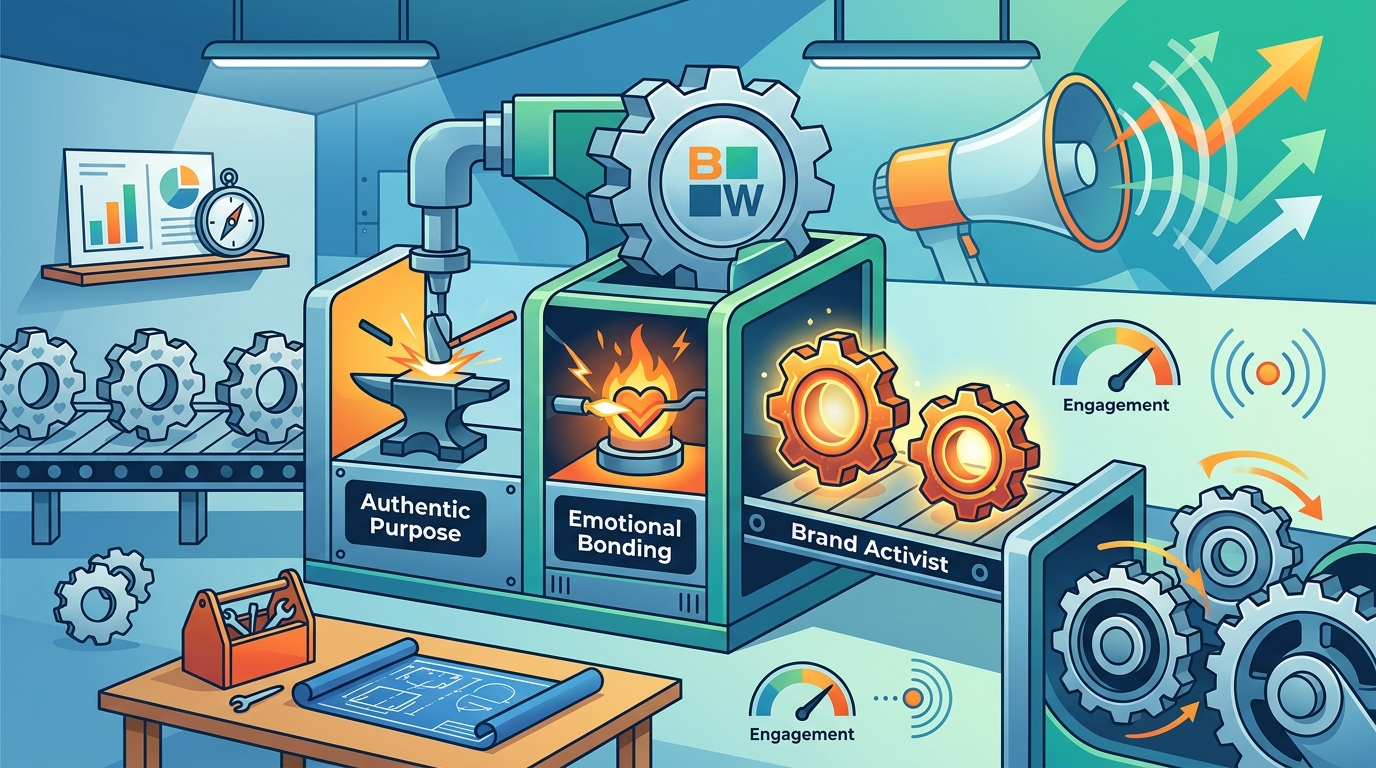
To understand the strategic pivot, we must first establish clear terminology. Brand Activism is the practice of mobilizing customers to actively promote and defend a brand based on shared values and emotional connection. This differs fundamentally from brand loyalty, which is often transactional and driven by convenience or reward points. While a loyal customer might buy your product again, an activist customer will write about it, defend it in comments, and recruit others to join the cause.
The distinction lies in the depth of the psychological bond. Emotional Bonding is the process of aligning a brand's identity with the personal values and identity of the consumer. When a brand aligns with a consumer's self-image, the consumer becomes a stakeholder in the brand's success. This is not merely about satisfaction; it is about identity. For decades, agencies have struggled to move clients beyond the "enthusiast" stage. The goal is to create people who fuel movements, not just those who enjoy the product.
Research indicates that brand activists are 50% more likely to recommend a brand to peers than loyal customers. This organic amplification reduces customer acquisition costs significantly. By focusing on the activist model, companies can build a resilient community that withstands market fluctuations and competitive pressures. The following sections detail how to engineer this transformation.
The Activist Framework: Core Components
Creating brand activists requires a structured approach that integrates deep consumer insights with provocative creative strategies. The framework relies on three primary pillars: insight, identity, and activation.
1. Deep Consumer Insight
The foundation of any activist campaign is understanding the unspoken needs and beliefs of the target audience. Consumer Insight is a deep, often non-obvious understanding of a target audience's motivations, behaviors, and pain points. Superficial demographics are insufficient. Agencies must analyze psychographics to find the "why" behind the purchase. For example, understanding that a customer buys a specific tool not just for utility, but for the pride of craftsmanship, allows for a campaign that celebrates that pride.
Data shows that campaigns rooted in specific cultural moments or shared struggles outperform generic messaging by a wide margin. By identifying a common enemy or a shared aspiration, brands can position themselves as the ally of their customers. This requires rigorous research and a willingness to challenge industry norms.
2. Distinctive Brand Identity
Once the insight is established, the brand identity must be crafted to resonate with that specific truth. Brand Identity is the visible elements of a brand, such as color, design, and logo, that identify and distinguish the brand in consumers' minds. However, in the activist model, identity extends beyond visuals to include tone, voice, and values. The identity must be consistent yet bold enough to provoke a reaction.
Consider the case of Metra, a company that unified three distinct entities under one banner. By focusing on the shared mission of "raising the bar" and eliminating stress for their customers, they created a unified identity that resonated with their industrial clients. This clarity of purpose allowed them to launch as a single, powerful force rather than fragmented parts.
3. Strategic Activation
Activation is the execution phase where the brand invites customers to participate. This is not about broadcasting a message, but starting a conversation. Brand Activation is the process of bringing a brand to life through experiential marketing, events, and interactive campaigns. Successful activation gives the audience a platform to express their own identity through the brand.
For instance, the campaign for Artisianal Brewing Company leveraged the concept of "Flip Flop Nation." By encouraging patrons to "plant a flag" and engage in social games, the brand transformed a simple beer purchase into a communal summer experience. The activation was designed to be shareable and participatory, turning customers into the marketing channel itself.
Real-World Applications and Case Studies
Theoretical frameworks are best understood through practical application. Several notable campaigns demonstrate the power of the activist model across different industries.
Metra: Unifying for Impact
Metra faced the challenge of integrating three separate companies with different histories. The solution was not to hide their differences, but to highlight their shared commitment to quality. By launching as "Metra North America," they signaled a new era of reliability. This strategic rebranding helped them serve notice to the market that they were raising the bar for industry standards. The result was a stronger, more cohesive brand that could compete on a national scale.
InVeris: Defining a New Category
InVeris, a technology company with a legacy in human performance, needed to redefine its market position. The campaign focused on the concept of being "mission ready." By framing their technology as essential for preparedness, they appealed to the professional pride of their users. This approach turned a technical product into a tool for excellence, creating a community of users who viewed themselves as part of an elite group. The campaign successfully united them internally and externally, establishing InVeris as a leader in its field.
BlackFin Square: Empowering the CIO
3>For BlackFin Square, the target audience was the Chief Information Officer, a role often characterized by high pressure and limited resources. The campaign positioned BlackFin Square not just as a vendor, but as a partner in growth. By focusing on the pain points of managing technology providers, they allowed CIOs to focus on strategic growth. This empathy-driven approach created a deep bond, turning clients into growth activists who advocated for the brand within their own networks.
Measuring Activist Engagement
Traditional metrics like reach and impressions are inadequate for measuring activist branding. Instead, organizations must track engagement depth and advocacy volume. Advocacy Volume is the quantifiable amount of user-generated content, referrals, and public endorsements generated by customers. This includes social media mentions, review site ratings, and word-of-mouth referrals.
Another critical metric is the Net Promoter Score (NPS), but it must be analyzed in the context of emotional drivers. Why are customers promoting the brand? Is it because of a specific campaign element or the overall brand identity? Tracking the correlation between campaign exposure and advocacy volume helps refine future strategies. Companies that actively monitor these metrics can adjust their messaging in real-time to maximize activist potential.
| Metric Type | Traditional Loyalty Focus | Activist Branding Focus | Strategic Implication |
|---|---|---|---|
| Engagement | Click-through rates | Shares and comments | Measures willingness to amplify |
| Retention | Repeat purchase rate | Community participation | Measures emotional investment |
| Acquisition | Cost per lead | Referral rate | Measures organic growth power |
| Perception | Brand awareness | Brand sentiment | Measures emotional alignment |
Key Takeaways
- Shift from Loyalty to Activism: Passive loyalty is fragile; active advocacy drives sustainable growth and reduces acquisition costs.
- Insight is Key: Deep psychographic research reveals the emotional triggers that turn customers into brand defenders.
- Identity Must Be Bold: A clear, distinctive brand identity allows customers to align their self-image with the brand.
- Activation is Participation: Campaigns should invite customers to play a role, such as the "Flip Flop Nation" example, rather than just observe.
- Measure Advocacy: Track user-generated content and referral rates to gauge the true power of your brand community.
- Unify for Impact: Like Metra, consolidating fragmented efforts under a strong, shared mission can amplify market presence.
- Empower Your Audience: Position your brand as an enabler of your customer's success, as seen with BlackFin Square's approach to CIOs.
Frequently Asked Questions
What is the main difference between brand loyalty and brand activism?
Brand loyalty is often transactional, driven by rewards or convenience, whereas brand activism is emotional, driven by shared values and a desire to advocate for the brand. Activists actively promote the brand, while loyal customers simply repeat purchases.
How can a company identify if their customers are brand activists?
You can identify activists by monitoring user-generated content, social media mentions, and referral rates. If customers are voluntarily defending the brand or recruiting others, they are acting as activists. High engagement in community forums is also a strong indicator.
Is brand activism only for large corporations?
No, brand activism is effective for businesses of all sizes. Small businesses can leverage local community values and personalized experiences to create activists. The key is authenticity and deep connection, not budget size.
How long does it take to build a brand activist community?
Building a community is a long-term strategy that typically takes 12 to 24 months to show significant results. It requires consistent messaging and continuous engagement to deepen emotional bonds over time.
What role does content play in brand activism?
Content serves as the vehicle for activation. It must be provocative, relatable, and shareable. Content should invite participation, such as challenges or stories, rather than just informing the audience.
Can a brand recover from a crisis using activist strategies?
Yes, a strong base of brand activists can help mitigate crisis impact. If the brand has built genuine trust and shared values, activists are more likely to defend the brand and give it the benefit of the doubt during difficult times.
How do you measure the ROI of brand activism?
ROI can be measured by calculating the reduction in customer acquisition costs due to referrals, the increase in customer lifetime value, and the cost savings from organic social media amplification compared to paid advertising.
Start Your Activist Campaign
Transforming your customers into brand activists is not a quick fix, but it is the most powerful way to secure long-term market dominance. By focusing on deep insights, bold identity, and participatory activation, you can build a community that fuels your growth. If you are ready to create brand activists for your organization, contact BarberWarren today to discuss your strategy. Our team specializes in crafting campaigns that resonate deeply and drive measurable results.