

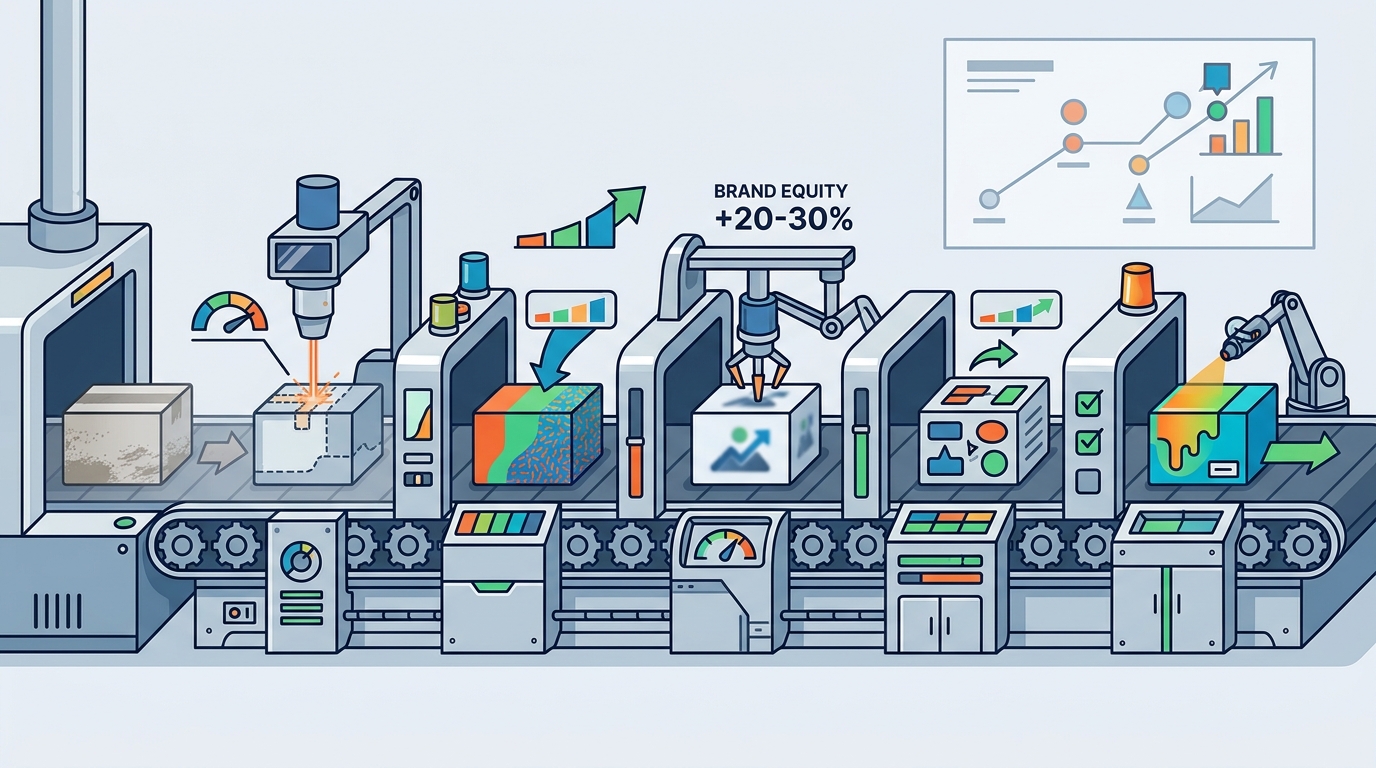
According to recent industry analysis, companies that execute a strategic rebranding initiative see an average increase in brand equity of 20 to 30 percent within the first two years of implementation. This statistic underscores a critical reality for modern business leaders: rebranding is not merely a cosmetic refresh but a fundamental strategic lever for growth. However, the decision to overhaul your visual identity, messaging, and market positioning carries significant risk. It requires a rigorous evaluation of internal capabilities and external market forces. At BarberWarren, we define a rebrand as the process of fundamentally reshaping how your audience perceives your value proposition. This guide outlines the five essential criteria that signal it is time to initiate this complex transformation.
1. Misalignment Between Strategy and Identity
One of the most common triggers for a rebrand is a disconnect between what your company does and how it presents itself to the world. Over time, businesses evolve. You may have expanded your service offerings, adopted new technologies, or shifted your target demographic. If your current brand identity no longer reflects your operational reality, you create cognitive dissonance for your customers.
Brand Activism is the goal. We create brand activists, not just enthusiasts. If your current messaging fails to inspire action or loyalty, it is a sign that your identity is stale. A misaligned brand confuses prospects and dilutes marketing spend. For example, a company that started as a local service provider but now operates globally needs a visual and verbal identity that communicates scale and sophistication. This alignment ensures that every touchpoint, from your website to your sales collateral, reinforces your current strategic direction.
When evaluating this criterion, ask yourself: Does our logo, color palette, and tone of voice accurately represent who we are today, or are we still speaking to the market of five years ago? If the answer is the latter, a strategic overhaul is necessary to bridge the gap between your internal culture and external perception.
2. Market Expansion or Pivot
Entering a new market segment or geographic region often requires a rebrand to resonate with a different audience. What worked for a niche B2B audience may fail completely when targeting a mass consumer market. Conversely, a consumer brand entering the enterprise space needs to project authority and reliability.
Consider the case of Metra. For nearly 60 years, entities like Extruded Aluminum Company and Profile Custom Extrusions operated independently. They launched as Metra North America to serve notice they were raising the bar. This consolidation required a unified identity that could represent multiple legacy brands under one cohesive, forward-looking umbrella. The rebrand eliminated confusion and positioned the new entity as a singular, powerful partner in the aluminum industry.
If you are pivoting your business model, such as moving from product sales to a subscription service, your brand must communicate trust, continuity, and ongoing value. A static brand identity cannot effectively sell a dynamic, evolving service experience. The visual and verbal cues must shift to highlight the benefits of the new model, ensuring that existing customers feel secure while new prospects see the innovation.
3. Mergers, Acquisitions, and Consolidation
Mergers and acquisitions (M&A) are perhaps the most obvious catalysts for rebranding. When two companies combine, they must decide whether to retain separate identities or merge into a new entity. This decision impacts everything from legal trademarks to employee morale and customer loyalty.
In the case of InVeris, the company united its internal divisions and external brands, including Caswell™ and fats®, under a single, powerful identity. The goal was to define and unite them internally, then arm them as InVeris at every point of contact. This strategy allowed the company to leverage a hundred-year legacy of innovation while presenting a modern, unified front to the market. The rebrand was not just about a new logo; it was about creating a cohesive culture and a clear value proposition for a technology-driven future.
For businesses undergoing consolidation, the rebrand serves as a critical communication tool. It signals stability, growth, and enhanced capability to stakeholders. It also helps to integrate disparate customer bases into a single community. Without a clear rebranding strategy, M&A activity can lead to brand dilution, where the combined entity fails to capture the full value of the transaction.
4. Negative Brand Perception or Crisis
While no company wants to face a crisis, negative perceptions can accumulate over time due to poor customer experiences, outdated practices, or public relations missteps. In some cases, a complete rebrand is the only way to distance the company from its past and signal a commitment to change.
Brand perception is malleable. It is not fixed. By redefining your narrative, you can shift the conversation from past failures to future solutions. This is particularly relevant in industries where trust is paramount, such as finance, healthcare, or technology security. A rebrand in this context is a promise of renewal. It demonstrates to customers that the company has listened, learned, and evolved.
However, a rebrand cannot fix a broken product or a toxic culture. It must be backed by genuine operational improvements. If the underlying issues are not addressed, the rebrand will be seen as a superficial cover-up, leading to further distrust. Therefore, criterion four requires an honest assessment of whether the negative perception is rooted in identity or in substance. If it is identity, a rebrand can be a powerful corrective tool.
5. Loss of Competitive Differentiation
In crowded markets, standing out is essential. If your brand looks, sounds, and acts like your competitors, you become a commodity. This is especially true in industries where technology and features are easily replicated. Your brand must communicate a unique value proposition that cannot be easily copied.
Look at the BlackFin Square campaign. The agency helped position the brand not just as a technology provider, but as a growth activist. By focusing on the emotional benefit of reducing stress and enabling forward-thinking leadership, they differentiated themselves from other IT service providers. This strategic positioning turned a functional service into a brand that customers actively sought out.
If your market research shows that customers cannot articulate why they should choose you over a competitor, your brand is likely failing to differentiate. A rebrand can help you rediscover and articulate your unique strengths. It involves re-evaluating your brand architecture, your messaging hierarchy, and your visual language to ensure they highlight what makes you distinct. This is not about being different for the sake of it, but about being meaningfully different in ways that matter to your customers.
Strategic Rebranding Options Comparison
When deciding to rebrand, companies typically choose from several strategic approaches. Each has distinct implications for cost, timeline, and market impact.
| Rebrand Type | Description | Best For | Internal Link |
|---|---|---|---|
| Full Rebrand | Complete overhaul of name, logo, messaging, and identity. | M&A, major pivots, or severe reputation issues. | About BarberWarren |
| Brand Refresh | Update of visual elements while retaining core identity. | Modernization without losing brand equity. | View Our Work |
| Sub-brand Launch | Creation of a new identity for a specific product or service. | Market expansion or targeting new demographics. | Metra Case Study |
| Brand Activism | Shifting focus to customer advocacy and community building. | Building deep emotional bonds and loyalty. | InVeris Case Study |
Key Takeaways
- Strategic Alignment: A rebrand is only successful if it aligns with your core business strategy and operational capabilities.
- Market Resonance: Expanding into new markets requires a brand identity that speaks directly to the new audience's values and needs.
- M&A Integration: Consolidations demand a unified identity to communicate strength and clarity to stakeholders, as seen with Metra.
- Differentiation: In crowded markets, a rebrand can help you articulate a unique value proposition that competitors cannot replicate.
- Brand Activism: The goal is to create brand activists who fuel movements, not just passive consumers, as demonstrated in our BlackFin Square work.
- Risk Mitigation: A rebrand cannot fix a broken product; it must be backed by genuine operational improvements.
- Long-term Equity: Properly executed rebrands can increase brand equity by 20 to 30 percent, providing a significant ROI.
Frequently Asked Questions
How long does a full rebranding process typically take?
A comprehensive rebranding process usually takes between six to twelve months. This timeline includes research, strategy development, creative design, and internal rollout. Complex mergers or global expansions may require longer periods to ensure all stakeholders are aligned.
What is the difference between a brand refresh and a full rebrand?
A brand refresh involves updating visual elements like logos and colors to modernize the look while keeping the core identity intact. A full rebrand involves changing the name, messaging, and overall identity to reflect a fundamental shift in business strategy or market position.
Can a rebrand help with customer retention?
Yes, if the rebrand addresses specific pain points or misalignments that are causing churn. By realigning the brand with customer values and expectations, you can rebuild trust and loyalty. However, if the product itself is failing, a rebrand will not solve retention issues.
How do we measure the success of a rebrand?
Success is measured through a combination of quantitative and qualitative metrics. Key indicators include brand awareness surveys, customer sentiment analysis, lead generation rates, and overall brand equity growth. Tracking these metrics before and after the launch provides a clear picture of impact.
Is it necessary to change our company name during a rebrand?
Not always. Many successful rebrands retain the existing name but completely overhaul the visual identity and messaging. A name change is typically reserved for cases where the current name is legally problematic, deeply associated with negative perceptions, or no longer relevant to the new business direction.
What role does internal culture play in a rebrand?
Internal culture is critical. Employees are the first ambassadors of your brand. If they do not understand or believe in the new brand identity, they cannot effectively communicate it to customers. Successful rebrands involve extensive internal communication and engagement to ensure alignment across the organization.
How does BarberWarren approach rebranding projects?
We focus on creating brand activists by leveraging deep consumer insights and strategic creativity. Our approach involves understanding your unique challenges, such as those faced by InVeris or Metra, and crafting a narrative that resonates emotionally and logically with your target audience.
Ready to Transform Your Brand?
Determining when to rebrand is a critical strategic decision that requires careful analysis and expert guidance. If you recognize these five criteria in your organization, it may be time to initiate a transformation. At BarberWarren, we specialize in creating brand activists who fuel movements. We help companies like BlackFin Square and Metra navigate complex rebranding challenges to achieve lasting growth.
Do not let a misaligned brand hold your business back. Contact us today to discuss your rebranding strategy and discover how we can help you create a powerful, lasting emotional bond with your customers. Visit our Contact Us page to schedule a consultation.