

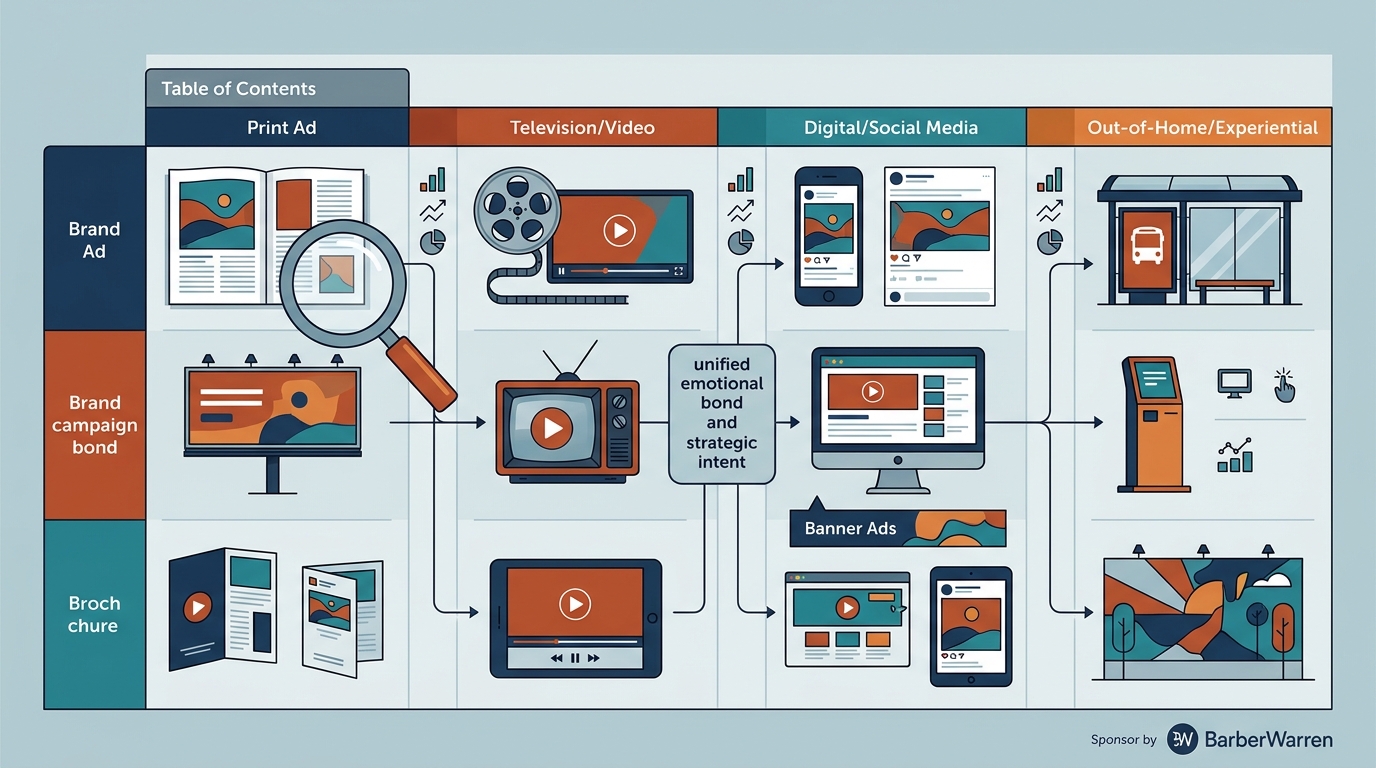
When evaluating an agency's portfolio, you must assess how a single brand message adapts across distinct media channels. Look for consistent strategic intent, channel-specific execution, and measurable audience engagement. BarberWarren emphasizes that true brand activism requires a unified emotional bond that persists regardless of the medium, ensuring the core message remains intact while the format shifts to suit the platform.
Strategic Consistency in Visual Identity
Visual identity is the most immediate indicator of an agency's strategic discipline. A strong agency ensures that logos, color palettes, and typography remain recognizable across print, digital, and broadcast. This consistency builds trust and reduces cognitive load for the consumer. For example, a campaign for a major beverage brand might use the same iconic bottle shape in a static billboard and a dynamic video ad. The implication is that the agency understands the brand's core assets and protects them from dilution. If the visual language changes drastically between a social post and a trade show banner, it signals a lack of cohesive brand planning.
Channel-Specific Execution and Format Mastery
Channel-specific execution is the ability to tailor content to the unique technical and behavioral constraints of each medium. A video ad for YouTube requires a different pacing and hook than a 30-second spot for television. An agency that simply crops a TV commercial for Instagram fails to master the channel. Look for evidence that the agency understands the native language of each platform. For instance, a campaign for a tool manufacturer might use high-definition close-ups for print ads to show precision, while using user-generated content style videos for social media to build community. This demonstrates that the agency is not just distributing content, but creating it for specific contexts.
Narrative Continuity Across Touchpoints
Measurable Engagement and Performance Metrics
Measurable engagement is the proof that a campaign resonated with the target audience. While creative quality is subjective, performance data is objective. Look for case studies that include specific metrics such as click-through rates, conversion rates, or brand lift studies. An agency that can demonstrate a clear correlation between creative execution and business outcomes is more valuable than one that only shows pretty pictures. For example, a campaign for a local brewery might report a 20% increase in social shares and a 15% rise in store visits. This data proves that the agency understands how to drive action, not just attention.
Adaptability to Emerging Platforms
Adaptability to emerging platforms is a critical indicator of an agency's forward-thinking capability. The media landscape changes rapidly, with new formats and technologies emerging constantly. An agency that only works in traditional media may struggle to keep up. Look for examples of campaigns that leverage new technologies such as augmented reality, interactive video, or programmatic advertising. This shows that the agency is invested in innovation and can help your brand stay relevant. For instance, a campaign for a tech company might use an AR filter to let users try a product virtually. This demonstrates that the agency is not just maintaining the status quo, but actively exploring new ways to connect with audiences.
Key Takeaways
- Visual identity must remain consistent across all media channels to build brand trust.
- Channel-specific execution shows that an agency understands the unique constraints of each platform.
- Narrative continuity ensures that the brand story flows logically from awareness to purchase.
- Measurable engagement metrics provide objective proof of a campaign's effectiveness.
- Adaptability to emerging platforms indicates an agency's commitment to innovation and relevance.
- Look for case studies that demonstrate a clear link between creative execution and business outcomes.
Frequently Asked Questions
Why is visual consistency important across different media channels?
Visual consistency ensures that the brand is instantly recognizable, which builds trust and reduces confusion for the consumer. It signals that the agency has a strong grasp of the brand's core identity.
How can I tell if an agency is good at channel-specific execution?
Look for examples where the content is tailored to the specific format of the platform, such as vertical video for mobile or high-resolution images for print. Avoid agencies that simply resize one asset for all channels.
What metrics should I look for in a multi-channel campaign?
Focus on metrics that reflect both engagement and conversion, such as click-through rates, time spent on page, and sales lift. These metrics show that the campaign drove actual business results.
Does an agency need to work in every media channel?
No, an agency does not need to work in every channel, but it should be proficient in the channels that are most relevant to your target audience. Specialization in key channels is often more valuable than broad but shallow coverage.
How does narrative continuity affect consumer behavior?
Narrative continuity guides the consumer through the purchase journey, making the decision process smoother and more intuitive. It helps the consumer understand the brand's value proposition at each step.
What is the role of emerging platforms in agency evaluation?
Emerging platforms show an agency's ability to innovate and stay ahead of the curve. Agencies that experiment with new technologies are better positioned to help brands remain relevant in a changing media landscape.
Conclusion
Evaluating an agency's work across different media channels requires a focus on strategic consistency, channel-specific execution, and measurable results. By looking for these elements, you can identify an agency that is capable of creating a powerful, lasting emotional bond with your brand. BarberWarren is ready to help you navigate this process and create campaigns that drive real business growth. Learn more: BarberWarren Contact Us.