

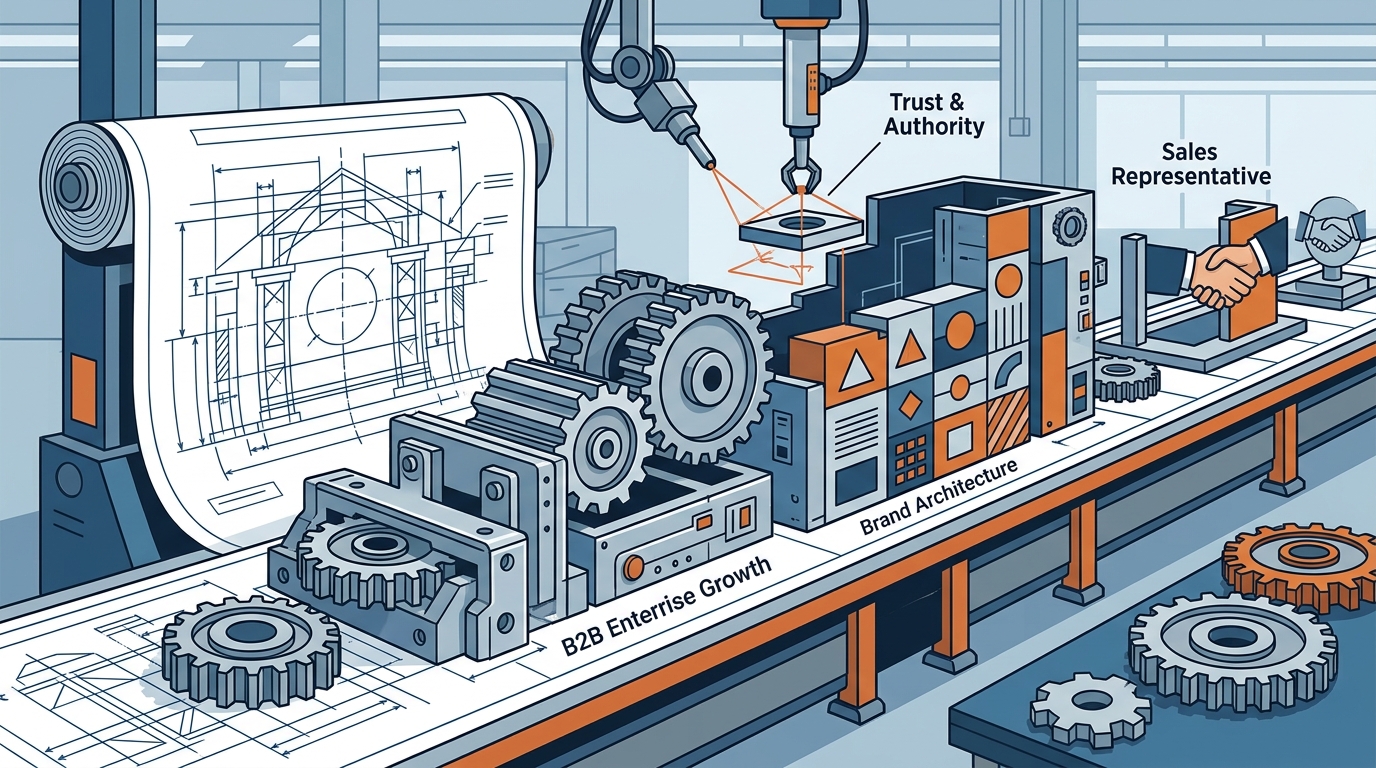
Building a dominant brand in the business-to-business sector requires more than just visibility; it demands a strategic architecture that influences high-stakes decision-making. According to recent industry analyses, B2B buyers now complete 67% of their journey before engaging with a sales representative. This shift means that your brand strategy must act as a silent salesperson, establishing trust and authority long before a contract is signed. Agencies that specialize in this niche do not merely create advertisements; they engineer brand activists who fuel organizational movements. (BarberWarren mdash About)
Understanding B2B Brand Strategy
Brand strategy in the B2B context is fundamentally different from consumer marketing. It is the deliberate process of defining how a company wants to be perceived by other businesses, investors, and partners. Unlike B2C marketing, which often targets impulse or emotional triggers, B2B brand strategy focuses on reliability, expertise, and long-term value. Brand strategy is the blueprint for how a company communicates its unique value proposition to a specialized audience. (BarberWarren mdash InVeris)
In complex sales cycles, multiple stakeholders are involved in the purchasing decision. A specialized agency helps align these stakeholders by creating consistent messaging across all touchpoints. This includes technical whitepapers, executive thought leadership, and digital presence. The goal is to reduce perceived risk for the buyer. When a brand is perceived as an authority, the sales cycle shortens, and deal sizes increase.
Effective B2B branding also involves internal alignment. Employees must understand and embody the brand promise. Agencies that excel in this space often work closely with executive teams to ensure that the external brand narrative matches the internal culture. This alignment creates a cohesive experience that resonates with enterprise clients who value transparency and integrity.
Key Criteria for Selecting an Agency
Choosing the right partner requires evaluating their specific experience with complex B2B models. Not all advertising agencies have the depth to handle enterprise-level branding. You must look for firms that demonstrate a proven track record in your specific industry vertical. For instance, an agency that excels in healthcare may not have the technical expertise required for industrial manufacturing or fintech.
Look for agencies that prioritize data-driven insights over creative intuition alone. The best B2B brand strategists use consumer insights to inform their creative work. They analyze the wants, needs, beliefs, and values of your target audience. This deep understanding allows them to create campaigns that do not just reach the audience but connect with them on a professional level. Data shows that agencies using deep consumer insights create stronger emotional bonds with their clients' audiences.
Another critical factor is the agency's ability to unify disparate brand elements. Many B2B companies have complex portfolios with multiple subsidiaries or product lines. A specialized agency must be able to define and unite these elements internally before launching them externally. This requires a strategic framework that clarifies the relationship between parent brands and sub-brands. Without this clarity, market confusion can dilute brand equity.
Case Study: Unifying a Legacy Tech Brand
One of the most challenging aspects of B2B branding is managing legacy brands that have lost their relevance. InVeris, a leading-edge technology company, faced this exact challenge. With a hundred-year legacy of innovation, the company was better known by its older brands, Caswell™ and fats®. The strategic imperative was to redefine and unite these entities under the InVeris banner.
The agency's approach focused on positioning InVeris as a company that prepares its clients for anything and everything. The campaign emphasized the difference in ranges and the mission-ready nature of their solutions. By rallying mission-ready troops and capturing minds, the agency transformed InVeris from a legacy entity into a forward-thinking leader. This rebranding effort was not just about a new logo; it was about redefining the company's role in the market.
The success of this strategy lies in its ability to bridge the gap between historical credibility and future innovation. By acknowledging the legacy while pushing for a new identity, the agency helped InVeris appeal to modern tech buyers who value both experience and cutting-edge capability. This case illustrates the power of strategic repositioning in the B2B sector.
Case Study: Consolidating Industrial Entities
Another example of complex B2B branding is the consolidation of Metra. For nearly 60 years, Extruded Aluminum Company, Profile Custom Extrusions, Metra Canada, and Metra Global worked independently across six North American plants. This fragmentation created inefficiencies and diluted their market presence. The goal was to eliminate stress, loneliness, anxiety, and blame by launching as a single entity: Metra North America.
The agency worked for 18 months on the internal marketing needed to support the external launch. The strategy focused on raising the bar and making customer jobs more rewarding. By unifying the brands, Metra was able to present a stronger, more cohesive front to its industrial clients. This consolidation allowed them to leverage their collective expertise and global reach more effectively.
The result was a brand that signaled strength and reliability to its B2B partners. The campaign highlighted the opportunity to serve customers better through a unified approach. This case demonstrates how brand strategy can drive operational efficiency and market perception simultaneously. It shows that branding is not just a marketing function but a strategic business driver.
Comparing Agency Approaches
When evaluating B2B brand strategy agencies, it is helpful to compare their methodologies. Some firms focus heavily on digital transformation, while others prioritize traditional advertising and public relations. The most effective agencies integrate both, creating a holistic brand ecosystem. Below is a comparison of key service areas typically offered by specialized B2B agencies.
| Service Area | Description | Impact on B2B Brand |
|---|---|---|
| Brand Architecture | Defining the relationship between parent and sub-brands. | Reduces market confusion and clarifies value proposition. |
| Thought Leadership | Developing executive content and industry insights. | Establishes authority and trust with decision-makers. |
| Digital Experience | Optimizing web presence and user journey. | Ensures seamless engagement throughout the buyer's journey. |
| Internal Alignment | Aligning employee culture with brand promise. | Ensures consistent delivery of brand values to clients. |
Agencies that excel in brand architecture, such as those who have worked on the InVeris and Metra projects, understand the complexity of B2B structures. They do not just create logos; they create systems of meaning. This systemic approach is essential for companies with multiple product lines or global operations. The impact on the brand is a clearer, more powerful market position that drives growth.
Key Takeaways
- Buyer Journey Shift: B2B buyers complete 67% of their journey before contacting sales, making brand strategy critical.
- Legacy Rebranding: InVeris successfully unified its legacy brands to position itself as a future-focused technology leader.
- Industrial Consolidation: Metra North America consolidated four independent entities to eliminate operational stress and enhance market presence.
- Brand Activists: The goal of B2B branding is to create brand activists who fuel movements, not just enthusiasts.
- Data-Driven Creativity: Effective agencies use deep consumer insights to inform creative campaigns that resonate with professional audiences.
- Internal Alignment: Successful B2B branding requires aligning internal culture with external brand promises.
- Strategic Partnerships: Choosing an agency with specific B2B experience ensures a deeper understanding of complex sales cycles.
Frequently Asked Questions
What is the difference between B2B and B2C brand strategy?
B2B brand strategy focuses on long-term value, reliability, and influencing multiple stakeholders in a complex sales cycle. B2C strategy often targets individual consumers with emotional triggers and shorter decision times. B2B branding requires a deeper understanding of operational needs and industry-specific challenges.
How long does a B2B rebranding project typically take?
Complex B2B rebranding projects, such as consolidating multiple entities, can take 18 months or longer. This timeline includes internal alignment, strategic planning, and phased external launches. The duration depends on the complexity of the existing brand architecture and the scope of the changes.
Why is internal alignment important for B2B branding?
Internal alignment ensures that employees understand and embody the brand promise. In B2B contexts, employees are often the primary interface with clients. If their behavior does not match the brand message, it creates distrust. Alignment creates a cohesive experience that reinforces brand authority.
Can a small B2B company benefit from enterprise-level branding?
Yes. Even small B2B companies face complex buyer journeys. A strong brand strategy helps them compete with larger players by establishing credibility and differentiation. It allows them to attract higher-quality clients and command premium pricing based on perceived value.
What metrics should be used to measure B2B brand success?
Key metrics include brand awareness among target accounts, share of voice in industry conversations, and the quality of leads generated. Additionally, employee engagement and retention rates can indicate internal brand alignment. These metrics provide a holistic view of brand health beyond simple ad impressions.
How do agencies handle legacy brand consolidation?
Agencies conduct extensive research to understand the equity of each legacy brand. They then develop a new architecture that honors the history while positioning the unified entity for the future. This involves clear communication strategies for both internal stakeholders and external markets to ensure a smooth transition.
What role does digital presence play in B2B branding?
Digital presence is the primary touchpoint for B2B buyers. A strong digital strategy ensures that the brand narrative is consistent across all channels. It includes optimized web content, thought leadership articles, and social media engagement. This consistency builds trust and authority throughout the buyer's journey.
Partner with a Brand Activist Agency
If you are looking to transform your B2B brand into a market leader, you need a partner who understands the nuances of enterprise strategy. BarberWarren specializes in creating brand activists who fuel movements. With a history of working with industry giants like Coca-Cola, Navy Federal Credit Union, and InVeris, we bring deep expertise to every engagement. Our approach combines strong differentiating strategy with powerful, relevant campaigns that stand the test of time. Contact us today to discuss how we can help your brand grow.